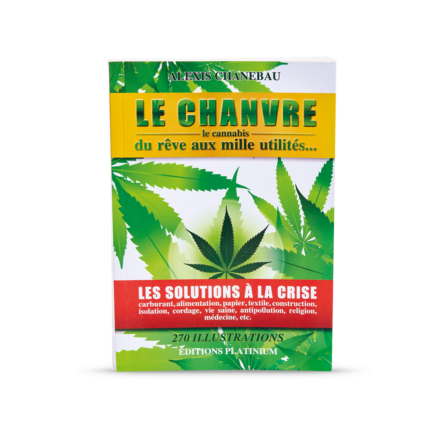
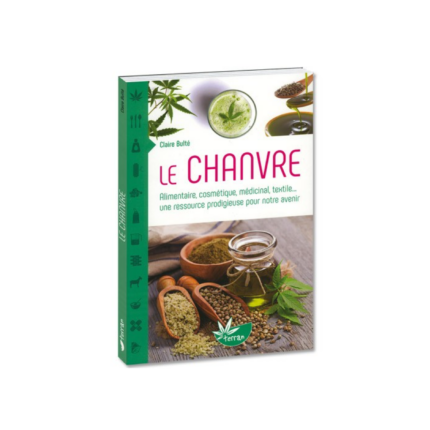
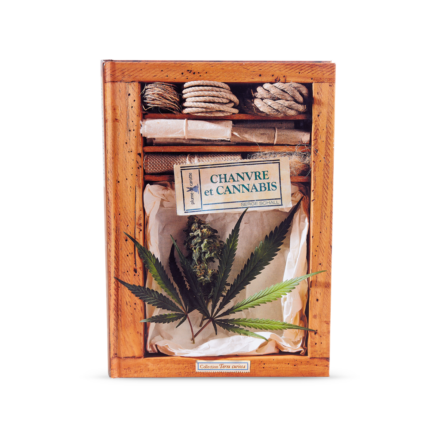
Alexis Chanebau, a composer, embarked on writing this book after ten years of research, in order to address the lack of imagination (or information) among our current politicians. .
This summary has the urgent task of highlighting the extraordinary uses of this plant, given that it is little known to the general public.
An indispensable tool for the economic independence of emerging civilisations and religions, this forgotten raw material makes it possible to easily produce all manner of high-quality essential goods: food, biofuels, lighting, heating, paper, textiles, rope, incense, cosmetics, medicines, etc.
An indispensable crop, hemp was undoubtedly one of the most widely cultivated plants on our planet until 1961. In his *Panegyric on the Pantagruelion*, published in 1546, François Rabelais even bestowed upon it the title of «Queen of Plants, generator of progress», writing that «hemp enabled mankind not only to reach across the seas, but also to attempt to scale the heavens».
George Washington, Thomas Jefferson and Benjamin Franklin, the founding fathers of the United States of America, were also convinced of this: between 1650 and 1850, an American farmer could pay his taxes using what we now call «marijuana».
This environmental momentum was brought to an abrupt halt, overshadowed by the rise of polluting industries: petrochemicals, wood-pulp-based paper manufacturing, cotton farming, etc.
Today, in the wake of the oil and financial crisis, hemp – thanks to its exceptional qualities – could finally be recognised as a universal, renewable resource of immense value to humankind.
"Why sacrifice our centuries-old forests and continue the costly extraction of our minerals, when we can achieve the same result with the annual harvest of hemp...?" (Henry Ford).





Reviews
There are no reviews yet